When clients first see a finished black walnut sofa or marble-top coffee table in a living room, they rarely picture the workshop floor where it all started. This article walks through the full journey of a custom black walnut furniture project — from raw curved components on the workshop pallet to a fully installed New Chinese-style living room — so you can see exactly what goes into a bespoke piece before it reaches your home.
Why Solid North American Black Walnut?
North American black walnut (Juglans nigra) is the timber we build with every day, and for good reason. Its heartwood ages from a rich chocolate brown to a deep, luminous purple-brown; the grain is fine and straight yet full of figure; and it is hard enough (Janka 1,010 lbf) to survive decades of daily use without denting. Unlike stained woods, walnut’s color goes all the way through — a scratch never reveals a lighter layer underneath.
It is also one of the most stable hardwoods available. Kiln-dried to 6–8% moisture, black walnut moves very little with seasonal humidity changes, which is why it is our preferred timber for wide tabletops, curved chair shells and integrated sofa frames.
Step 1 — Shaping Curved Components
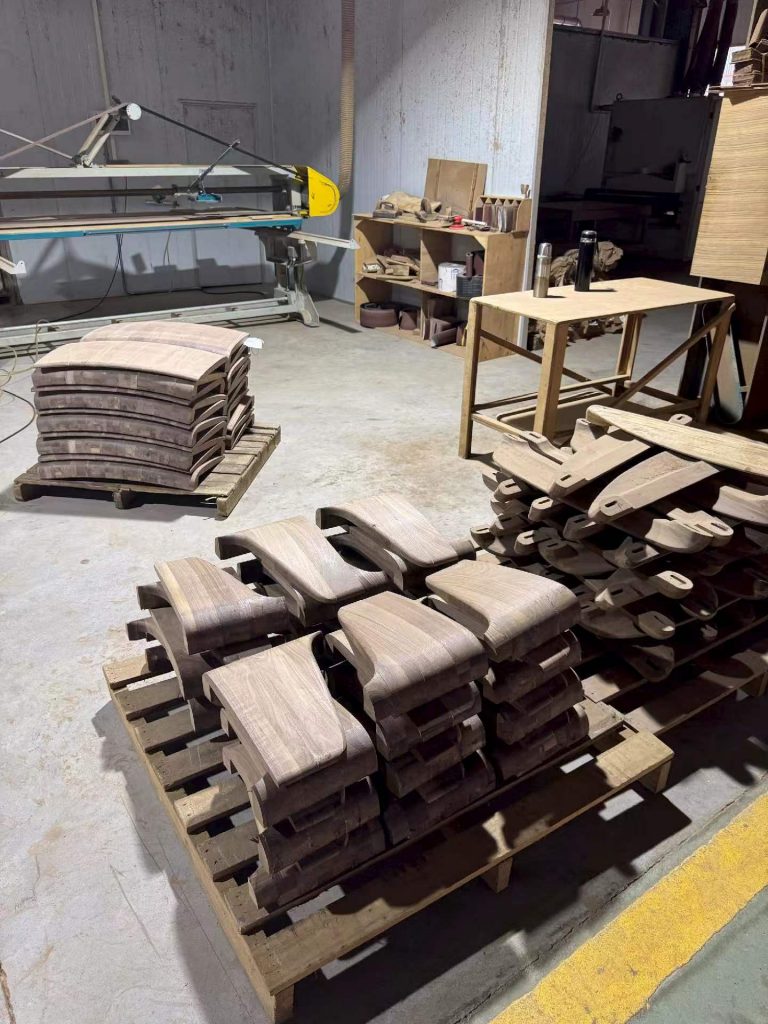
Every project begins on the workshop floor. Curved chair backs, seat shells and armrests are cut from solid walnut blanks, then shaped with a combination of CNC routing and hand fairing. At this stage the components look almost organic — smooth, flowing curves that are impossible to achieve with flat-sawn boards alone.
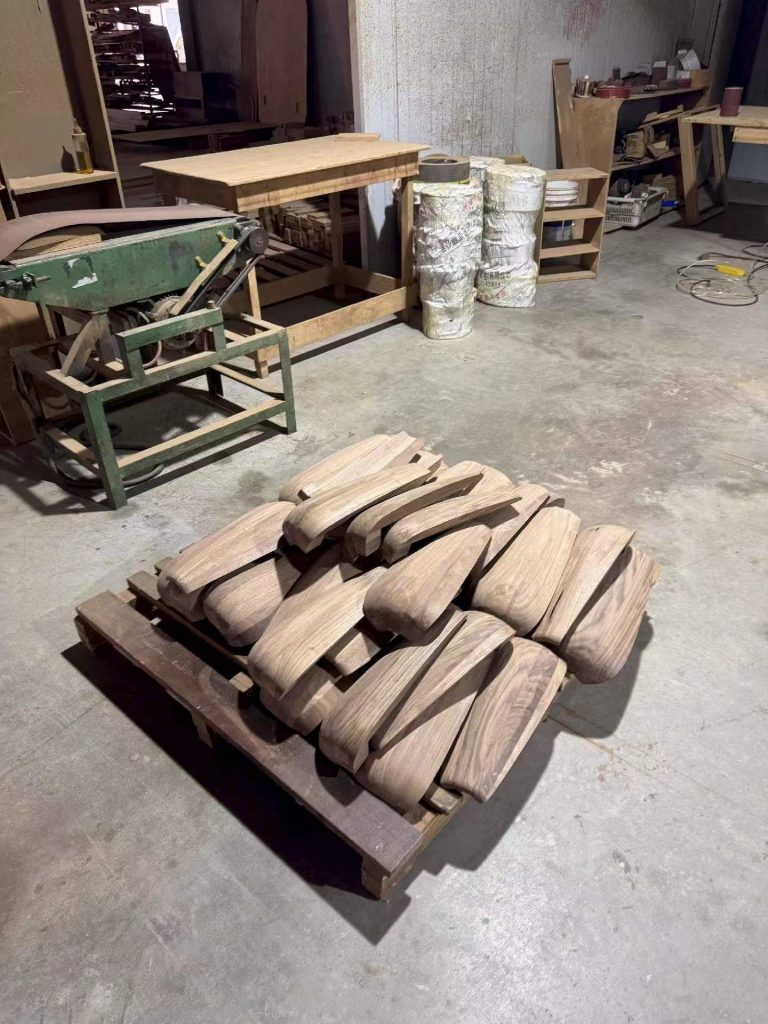
Each blank is stacked on a pallet between operations so the wood can acclimatise and so we can batch-check dimensions against the client’s approved drawings. Consistency matters: if one seat shell is 2 mm off, the chair will rock.
Step 2 — Assembly & Sanding
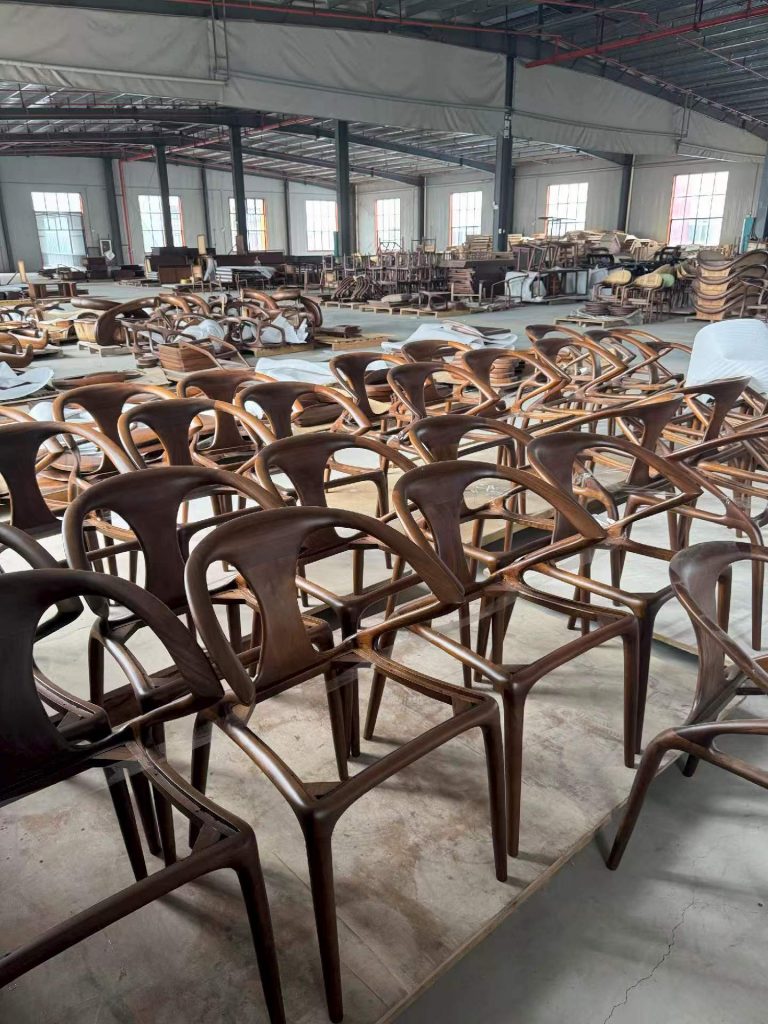
Once the components are dimensioned, chairs are dry-assembled to verify joinery before glue-up. We use mortise-and-tenon or dowel joinery — no visible screws — so the frame reads as a single, continuous form. After glue-up, each joint is hand-sanded through 120, 180 and 240 grit until the transition between parts is invisible.
Step 3 — Hand-Rubbed Oil Finishing
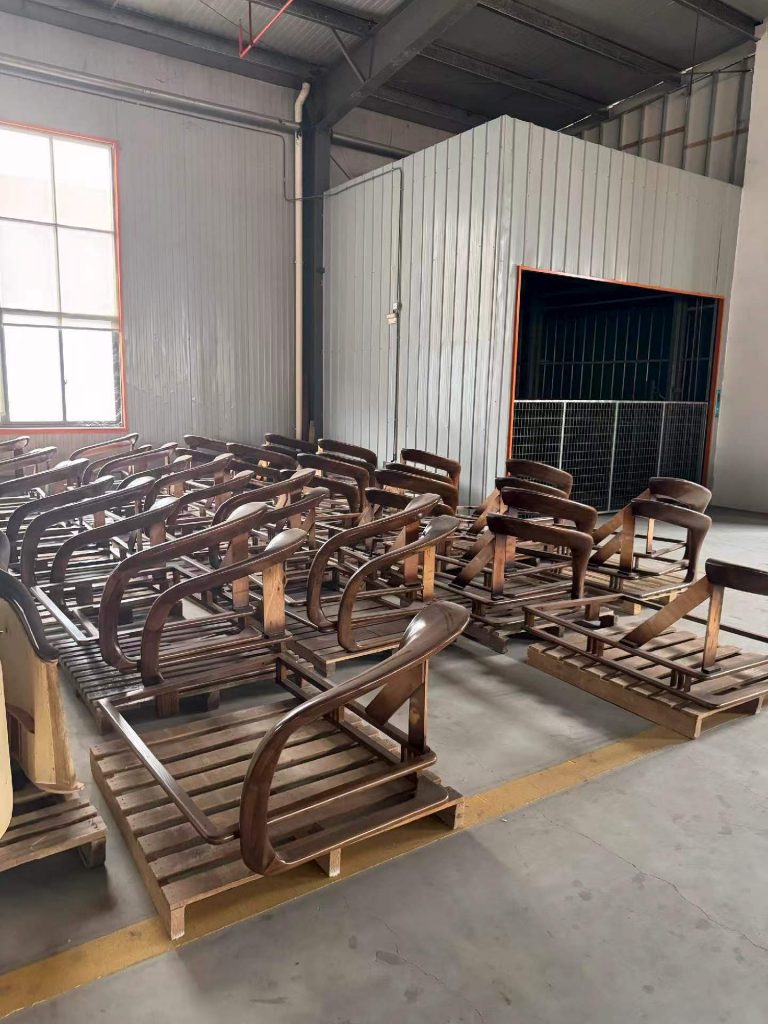
The frames then move to the spray booth for finishing. We apply multiple thin coats of penetrating oil — not a thick surface film — so the finish soaks into the wood, hardens the fibres and lets you feel the grain rather than a plastic layer. Between coats the surface is buffed with fine steel wool. This is what gives black walnut its characteristic warm, living sheen.
Step 4 — Installation: A New Chinese-Style Living Room
For this project, the finished pieces — a teal-upholstered sofa with solid walnut arms, two sculptural swivel chairs on brass bases, a marble-top coffee table and a low walnut media console — were delivered to a villa and arranged around a full-height marble feature wall and a circular mountain landscape.
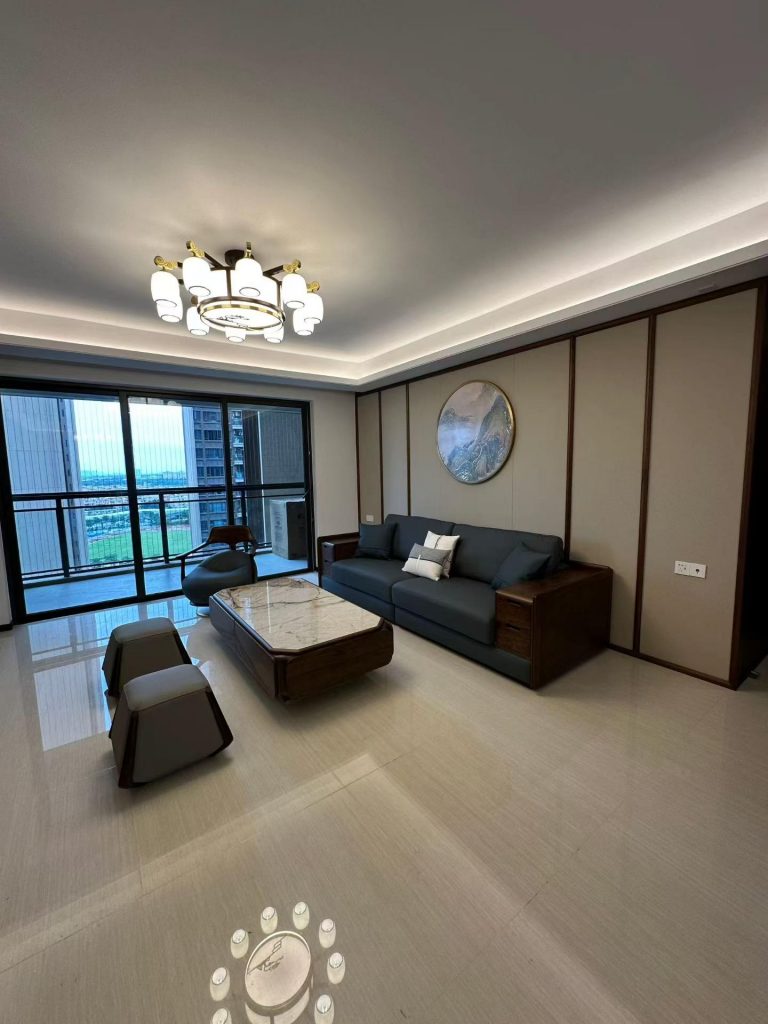
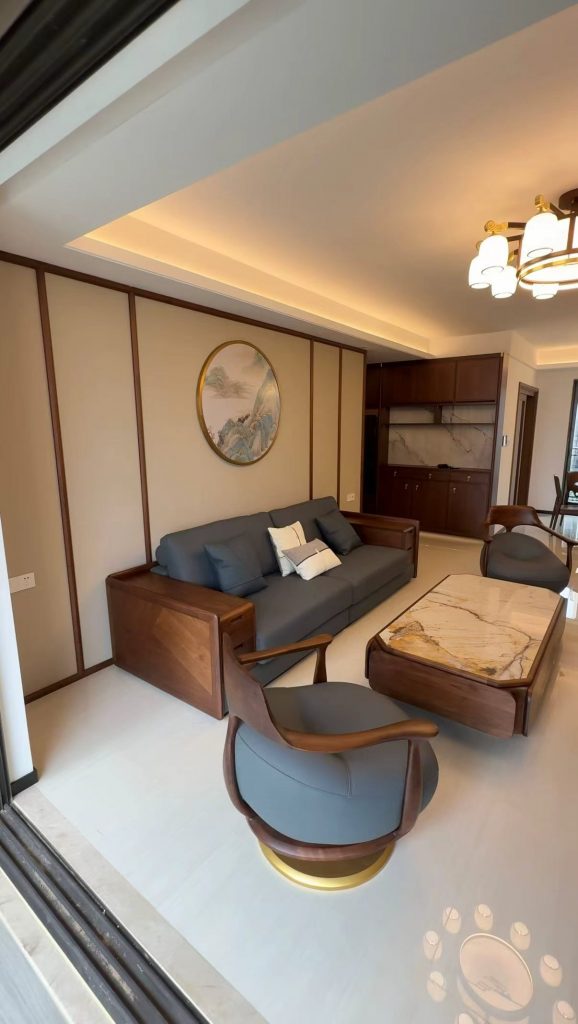
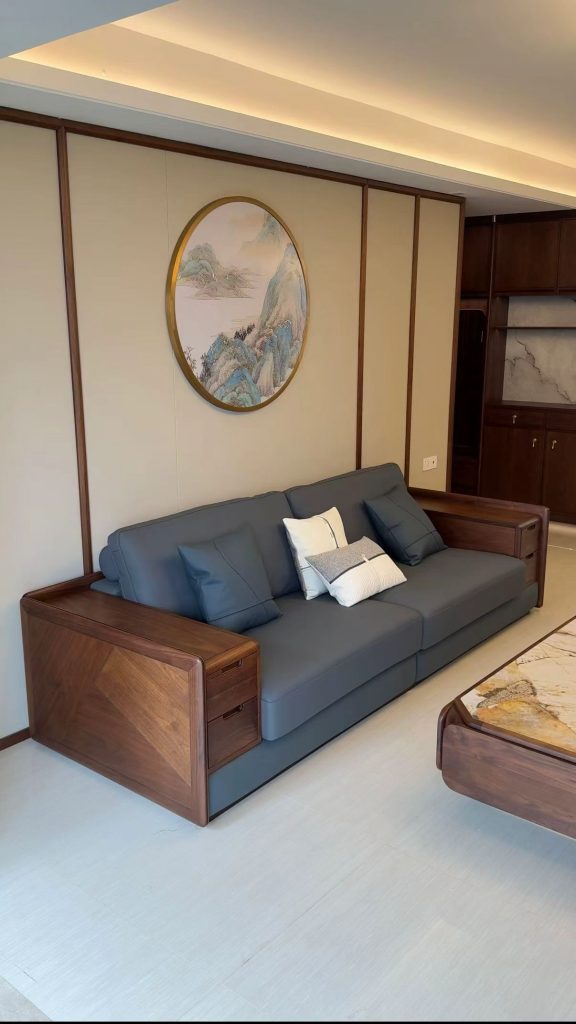
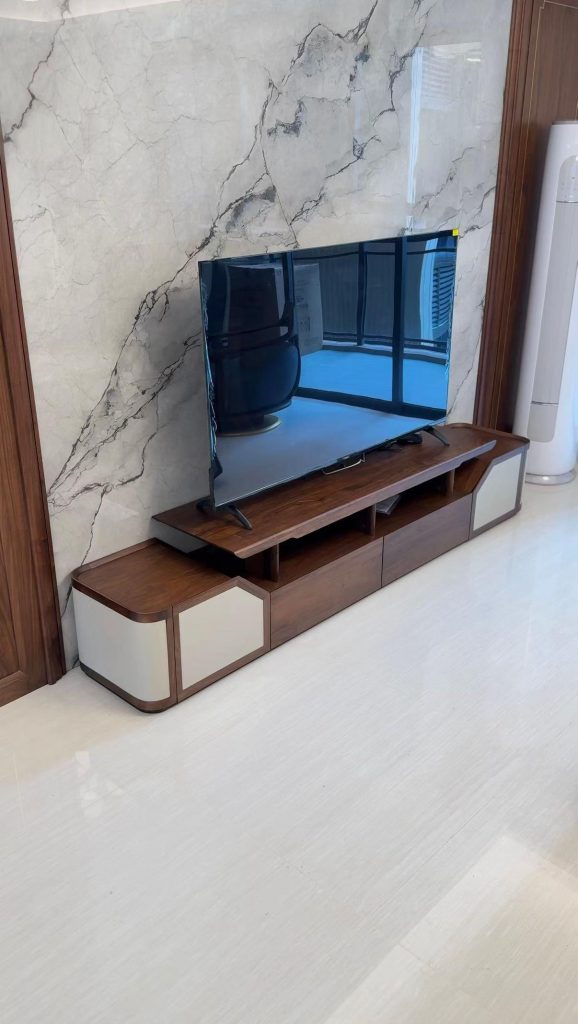
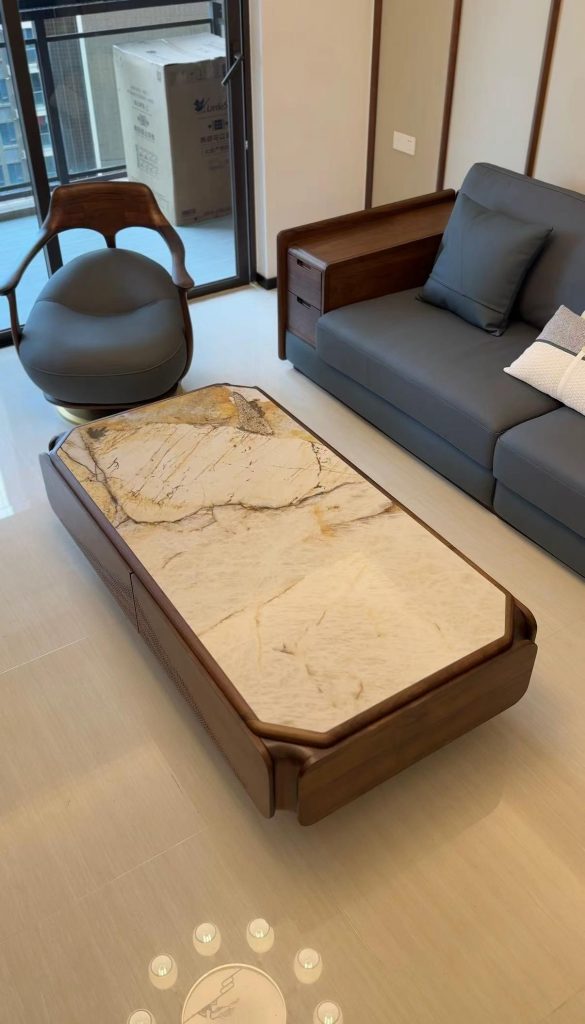
The result is a room that feels calm and layered rather than flat: the walnut warms the cool marble and teal upholstery, the circular art softens the strong horizontal lines of the sofa and console, and the brass swivel bases add a quiet contemporary detail. This is the goal of every bespoke commission — furniture that looks like it was always meant to live in that room.
Work With Us
We design and build custom black walnut furniture for clients worldwide and ship from our workshop in China. If you are planning a whole-house project or a single statement piece, send us a message or explore our custom furniture collection to start.